
On a $15,000 job, the card fee is $450.
HVAC, plumbing, electrical, remodels, roofing, landscaping. The tickets are big, which means the fees are big: $450 gone on a single $15K card payment at typical rates. Across a season of work that adds up, and most of it is negotiable.
Get a free rate analysis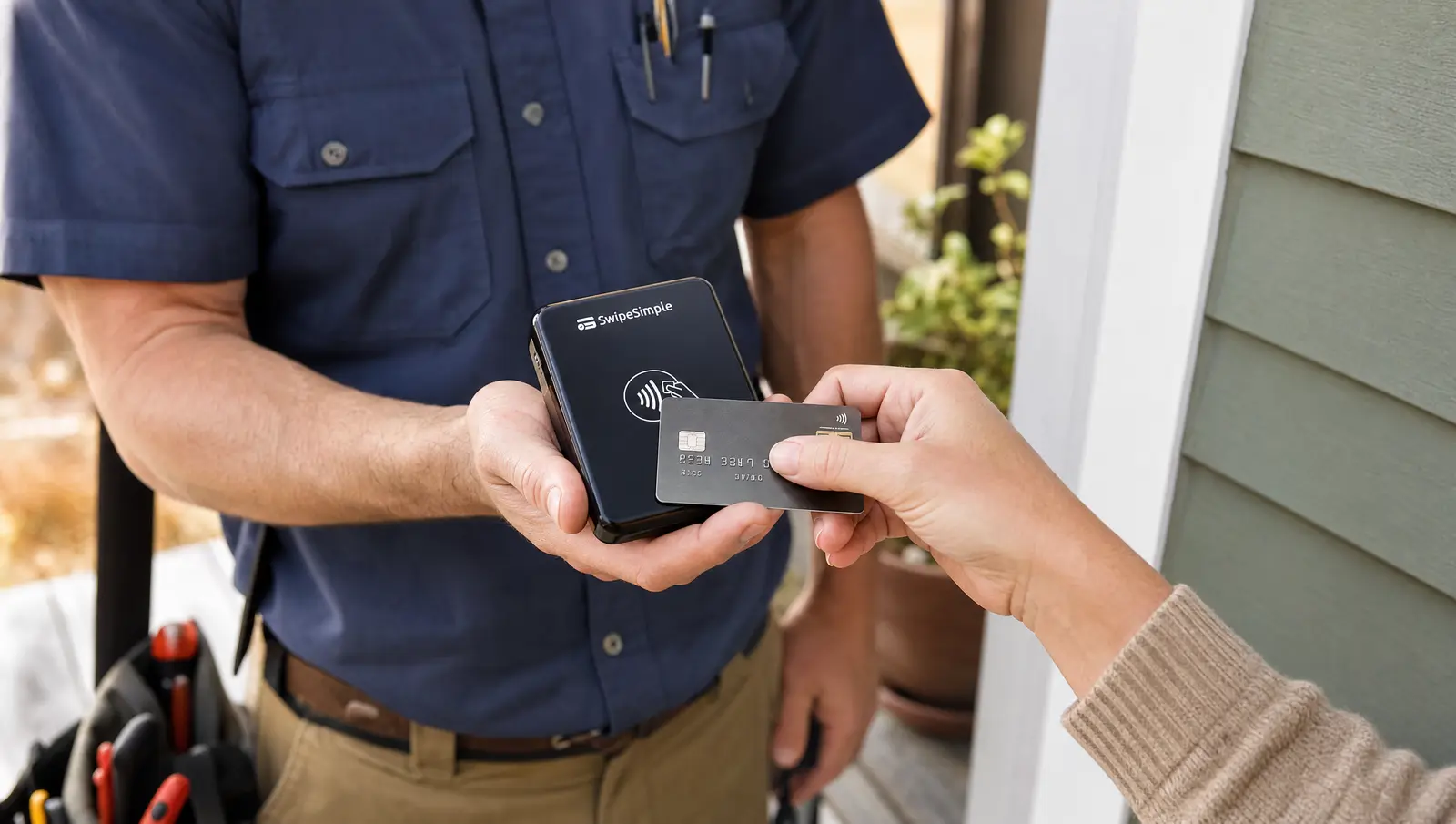
What contractors are up against
The fee scales with the job
A coffee shop pays fees on $6 sales. You pay them on $15,000 ones. The percentage is the same; the dollars are not, and nobody warns you how fast they stack up across a busy season.
You collect in the field, not at a counter
Deposit in the driveway, final payment in the truck, a card read at the kitchen table. A setup built for a front-desk terminal leaves you driving back for checks.
Deposits and progress billing
Half down, draws at milestones, balance on completion. That needs a card kept on file and charged on schedule, not a customer re-reading their number three times.
Slow pay and chasing invoices
A texted pay link gets a $9,000 invoice paid the same afternoon. A mailed paper invoice gets paid whenever it gets paid.
The program fit
Dual pricing
Details →On big-ticket jobs customers already expect a card fee, and dual pricing puts it on the card price plainly. Most of our trade clients run it and keep the full invoice.
ACH and eCheck
Details →On a $20,000 deposit, a flat bank-to-bank fee beats a percentage by a wide margin. We route the large payments to ACH and keep cards for the rest.
Interchange plus
Details →If you would rather absorb the fee in one price, absorb the leanest version of it, not a padded flat rate.
The systems we'd quote
Tap to Pay on your phone
Details →Take a chip or tap card on the phone already in your pocket, on the job site, with no extra hardware.
SwipeSimple mobile
Details →A pocket reader plus invoicing and text-to-pay for the crew that bills from the field.
Virtual terminal
Details →Keep a card on file, charge deposits and progress draws on schedule, and send invoices that pay in one tap.
Clover
Details →For the shop or office front desk when you want one system for counter sales, invoicing and reporting.
Fair questions
Can I take a card on the actual job site?
Yes. Tap to Pay turns your phone into the terminal for chip and contactless cards, and a small Bluetooth reader adds swipe. Same negotiated account underneath, not app-store convenience pricing.
How do deposits and progress payments work?
We set up a virtual terminal that keeps the customer's card on file, so you charge the deposit, the milestone draws and the balance on your schedule without re-collecting the number each time.
Should I pass the fee through on big jobs?
On large tickets most customers expect it, and dual pricing shows a cash price and a card price so the choice is theirs. On a $15K job that is roughly $450 you keep. We set it up compliantly or leave it off, your call.
Is ACH really cheaper for big payments?
On large amounts, yes, by a lot. A percentage of $20,000 is hundreds of dollars; a flat bank-to-bank fee is a few. We send the big deposits to ACH and keep cards for smaller, faster payments.
Can I text customers a link to pay?
Yes. Text-to-pay sends a secure link to a phone, the customer pays in a tap, and the money routes to your account. It is the fastest way trade businesses get large invoices paid.
What's the real saving for a contractor my size?
Send one recent statement. At the ticket sizes most trades run, a negotiated rate plus moving big deposits to ACH usually saves thousands a year, and you see your exact number in writing before you change anything.
See what a season of fees is really costing you.
One statement, 24 hours, your real number in plain English.